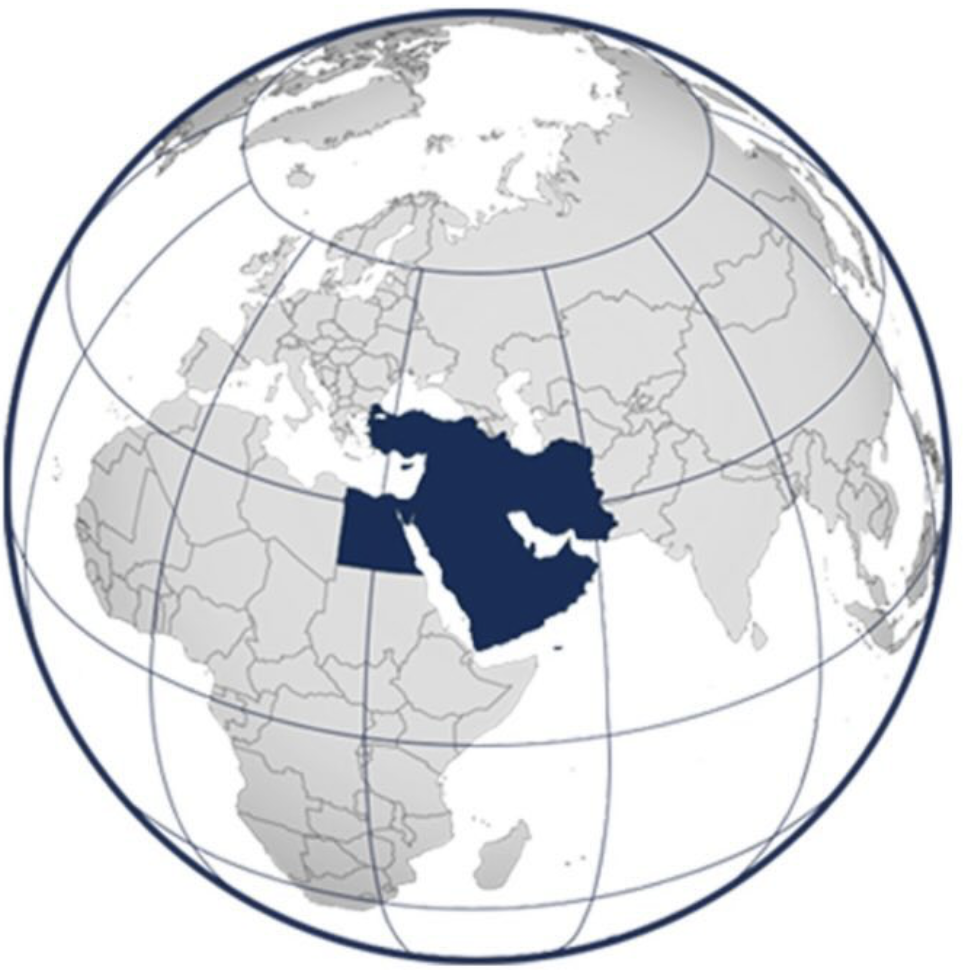
The Role of Mercenary and Private Security Actors in Illicit Resource and Arms Trafficking Networks in the Middle East and Africa
A research paper examining how mercenary and private security actors become embedded in illicit resource, logistics, and arms-trafficking networks across the Middle East and Africa.
Submission listed on OHCHR
This paper by Baran Ayguven and Camille Drintcho is listed as a submission on the OHCHR call-for-input page on the use of mercenaries, mercenary-related actors, and private military and security companies.
The contemporary conflict landscape across the Middle East and Africa has seen armed non-state actors operate in the grey zone between commercial security providers and foreign private armies for rent. This has complicated both legal classification and governance.
International legal definitions of mercenarism remain narrow, often requiring direct participation in hostilities, foreign nationality, and demonstrable private-profit motivation. These criteria can exclude corporatized military actors that present themselves as logistics providers, protection firms, or technical contractors.
These definitional gaps allow some actors to blur the line between security contracting and proxy warfare. Their responsibilities may extend beyond conventional protection services to convoy escort, strategic infrastructure security, and interaction with smuggling networks.
The convergence between mercenary actors and illicit economies reflects structural incentives in resource-rich but institutionally weak states. Security or battlefield support may be compensated through access to revenue-generating assets rather than direct payment.
Asset-backed security contracts can give mercenary or private security actors operational control over production sites, transport routes, and downstream access. This embeds them in commodity supply chains that may intersect with sanctions evasion and trafficking networks.
In fragmented conflict zones, private military entities can become responsible for securing transit routes linking production zones to export nodes such as ports, airfields, or border crossings. Over time, these arrangements can institutionalize illicit trafficking routes.
The paper examines two case studies: Syria's Al-Qaterji network and the Wagner Group. While structurally different, both show patterns of infrastructural protection, smuggling-route facilitation, and integration into wartime economies.
The Qaterji network rose during Syria's civil war as a commercial and militia-linked intermediary moving oil, wheat, and other commodities across front lines. Security subsidiaries and convoy protection arrangements helped move strategic resources from contested territories into regime-held areas.
Qaterji-linked activity has also been connected in reporting and sanctions announcements to Iranian oil transfers, cross-line fuel markets, wheat procurement, militia recruitment, and wider regime logistics. These activities show how commercial networks and armed protection can merge.
The Wagner Group provides a second model. In the Central African Republic, Wagner reportedly exchanged regime security and training support for access to gold and diamond concessions, particularly through Prigozhin-linked companies and mining sites such as Ndassima.
Wagner's control over mining areas, airfields, routes, and local intermediaries enabled rent extraction from artisanal mining and commodity flows. Similar dynamics have been documented in illicit gold, diamond, and fuel economies across parts of Africa.
After Yevgeny Prigozhin's death, Russia sought to reassert control through structures often referred to as Africa Corps. Yet the informal economies and local networks built under Wagner are likely to endure and recalibrate around new patrons.
Both case studies show that mercenary and private security actors can operate as embedded intermediaries in extraction, transport, and strategic-resource trade. They are not merely combat providers; they are stakeholders in the continuity of wartime revenue systems.
A better understanding of these economic and operational roles is essential for policymakers, sanctions authorities, and researchers seeking to disrupt illicit networks and reduce the destabilizing consequences of privatized military activity.
References
Allison et al., Wagner's Business Model in Syria and Africa, RUSI, 2025.
All Eyes on Wagner, European Investigative Collaborations, and Dossier Center, CAR: Prigozhin's Blood Diamonds, 2022.
United States Department of the Treasury, Treasury Sanctions Russian Proxy Wagner Group as a Transnational Criminal Organization, 2023.
United States Department of the Treasury, Treasury Imposes Sanctions on Assad's Oil Traders, 2018.
Kalin and Al-Khalidi, How a businessman struck a deal with Islamic State to help Assad feed Syrians, Reuters, 2017.
Global Initiative Against Transnational Organized Crime reporting on Wagner/Africa Corps and fuel-market capture.